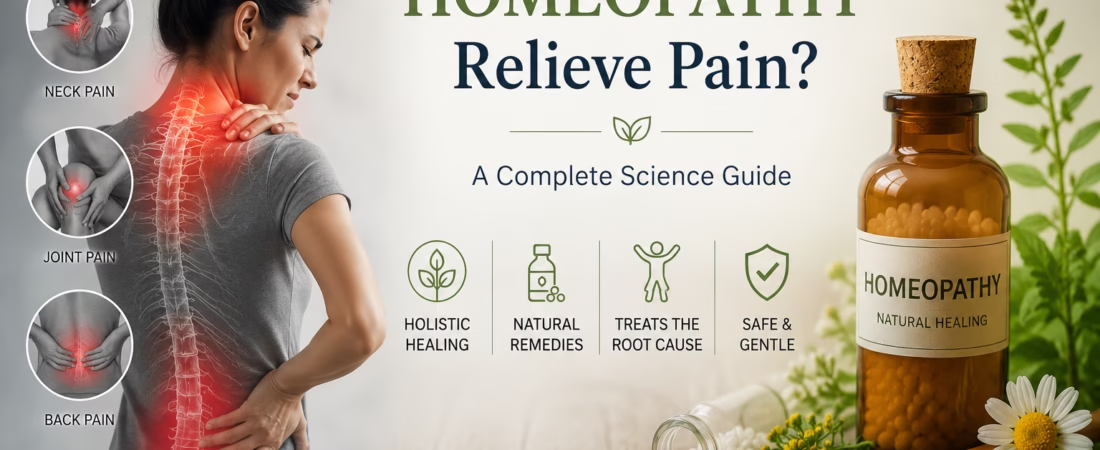
Introduction: Why Pain Demands Our Attention
Pain is the body’s universal language of distress. Pain comes in various forms, like a sharp sting, a dull ache, or a burning sensation. It affects everyone across all ages, cultures, and geographies. According to the Global Burden of Disease Study, over 1.5 billion people worldwide suffer from chronic pain conditions.
Yet despite its prevalence, pain remains poorly understood and often inadequately treated. This comprehensive guide aims to:
- Explain the different types and mechanisms of pain
- Explore common painful conditions and their root causes
- Present homeopathic approaches that offer scientific, evidence-based relief
- Bridge the gap between conventional understanding and homeopathic wisdom
🔬 Part 1: The Science of Pain—How Your Body Experiences It
What Is Pain, Really?
The International Association for the Study of Pain (IASP) defines pain as:
“Pain is an unpleasant sensory and emotional experience. It is associated with actual or potential tissue damage.”
Notice two key words here:
- Sensory – the physical sensation
- Emotional – the psychological experience
Pain is never purely physical. It involves your nerves, spinal cord, brain, and even your past experiences with pain.
The Pain Pathway (Simplified)
- Stimulus – Injury, inflammation, or damage occurs
- Transduction – Specialized nerve endings (nociceptors) convert the stimulus into electrical signals
- Transmission – Signals travel along nerves to the spinal cord
- Modulation – The spinal cord can amplify or dampen signals
- Perception – The brain interprets the signals as pain
Homeopathic insight: Different remedies work at different points along this pathway. This explains why homeopathy can be so precisely targeted.
Part 2: Types of Pain: A Complete Classification
2.1 By Duration
| Type | Duration | Examples |
|---|---|---|
| Acute Pain | Less than 3 months | Post-surgery, injury, burns |
| Chronic Pain | More than 3 months | Arthritis, back pain, fibromyalgia |
| Subacute Pain | 6 weeks–3 months | Healing fractures, lingering strains |
2.2 By Mechanism
A. Nociceptive Pain
Caused by damage to body tissues (muscles, joints, skin).
- Somatic pain – sharp, localized (e.g., cut finger, broken bone)
- Visceral pain – vague, cramping, deep (e.g., menstrual cramps, appendicitis)
B. Neuropathic Pain
Caused by damage to the nervous system itself.
- Examples: Sciatica, diabetic neuropathy, post-herpetic neuralgia
- Descriptors: Burning, shooting, electric-shock-like, tingling
C. Nociplastic Pain
A newer category—pain without clear tissue or nerve damage, but with altered pain processing.
- Examples: Fibromyalgia, irritable bowel syndrome, tension headaches
2.3 By Location
- Localized pain – confined to one area (e.g., knee arthritis)
- Radiating pain – travels along nerve paths (e.g., sciatica)
- Referred pain – felt away from the source (e.g., heart attack felt in left arm)
2.4 By Quality
- Throbbing/pulsating – often inflammatory
- Stabbing/lancinating – often neuropathic
- Burning – nerve involvement
- Aching/dull – musculoskeletal
- Cramping – muscle or visceral
Part 3: Common Painful Conditions and Their Causes
3.1 Musculoskeletal Pain
| Condition | Cause | Typical Pain |
|---|---|---|
| Osteoarthritis | Cartilage wear-and-tear | Deep aching in joints |
| Rheumatoid arthritis | Autoimmune inflammation | Symmetrical joint pain, morning stiffness |
| Lower back pain | Muscle strain, disc issues, posture | Variable—dull to sharp |
| Fibromyalgia | Central sensitization | Widespread aching, tender points |
3.2 Head and Facial Pain
| Condition | Cause | Typical Pain |
|---|---|---|
| Tension headache | Muscle tension, stress | Band-like pressure around head |
| Migraine | Neurological, vascular | Throbbing, often one-sided, with nausea |
| Cluster headache | Trigeminal nerve activation | Excruciating, behind one eye |
| Trigeminal neuralgia | Nerve compression | Electric shock-like, facial |
3.3 Neuropathic Pain Syndromes
| Condition | Cause | Typical Pain |
|---|---|---|
| Diabetic neuropathy | High blood sugar damages nerves | Burning, numbness in feet/hands |
| Post-herpetic neuralgia | Shingles complication | Burning after rash heals |
| Sciatica | Spinal nerve compression | Shooting pain down leg |
3.4 Visceral and Pelvic Pain
| Condition | Cause | Typical Pain |
|---|---|---|
| Endometriosis | Uterine-like tissue outside uterus | Cyclic pelvic pain |
| Interstitial cystitis | Bladder inflammation | Suprapubic pressure, urinary urgency |
| Irritable bowel syndrome | Gut-brain axis dysfunction | Cramping, bloating, and altered bowel habits |
Part 4: Homeopathic Approach to Pain: A Scientific Perspective
4.1 How Homeopathy Views Pain
Homeopathy doesn’t just treat the symptom of pain—it addresses the total person experiencing pain. This includes:
- Physical sensations (type, location, modalities)
- Emotional state (anger, grief, anxiety accompanying pain)
- General characteristics (temperature preferences, sleep patterns, thirst)
Scientific basis: Research suggests homeopathic remedies may work through:
- Nanoparticle effects – source materials detectable in ultra-dilutions
- Gene expression modulation – influencing pain pathways
- Hormetic effects – low-dose stimulation of adaptive responses
4.2 Homeopathic Pain Management Principles
- Individualization – no two pain patients get the same remedy
- Totality – considering all symptoms, not just pain
- Minimum dose – using the smallest necessary stimulus
- Holistic healing – addressing root causes, not suppressing symptoms
Part 5: Specific Homeopathic Remedies for Pain
Important: These remedies should be taken under professional supervision. Consult Dr. Muhammad Makki at smhealthzone.com for personalized prescription.
5.1 For Inflammatory Pain
| Remedy | Best For | Key Indicators |
|---|---|---|
| Bryonia alba | Joint pain, pleurisy | Worse from movement, better from pressure/stillness |
| Rhus toxicodendron | Arthritis, back strain | Worse initial movement, better continued motion |
| Apis mellifica | Stinging, burning pain | Swelling, heat, better cold applications |
| Belladonna | Sudden, intense pain | Throbbing, redness, heat |
5.2 For Neuropathic Pain
| Remedy | Best For | Key Indicators |
|---|---|---|
| Hypericum perforatum | Nerve injuries, shooting pain | Especially in fingers/toes, from injury |
| Kalmia latifolia | Neuralgia, sciatica | Lightning-like pains, radiating downward |
| Magnesia phosphorica | Cramping, spasmodic pain | Better warmth, pressure, “cramps” |
| Aconitum napellus | Sudden, intense neuralgia | With anxiety, restlessness, after exposure |
5.3 For Musculoskeletal Pain
| Remedy | Best For | Key Indicators |
|---|---|---|
| Arnica montana | Trauma, overexertion | Sore, bruised feeling; “bed feels too hard” |
| Ruta graveolens | Periosteum, tendon injuries | After sprains, fractures, and bone pain |
| Rhododendron | Weather-sensitive pain | Worse before storms, cold dampness |
| Ledum palustre | Puncture wounds, gout | Worse heat, better cold; travels upward |
Part 6: Homeopathy vs. Conventional Pain Management
| Aspect | Conventional Medicine | Homeopathy |
|---|---|---|
| Mechanism | Block pain signals (NSAIDs, opioids) | Can achieve a lasting resolution |
| Side effects | GI bleeding, liver/kidney stress, addiction risk | Minimal when prescribed correctly |
| Duration | Temporary relief | Can achieve a lasting resolution |
| Root cause | Often symptom-focused | Always seeks underlying factors |
| Safety | Significant precautions needed | Safe for all ages |
The ideal approach? Integrative—using both when appropriate, under professional guidance.
Part 7: Often Asked Questions
Q 1: Is homeopathy effective for chronic pain?
A: Yes. Research in journals like Rheumatology and Pain shows positive results for conditions like fibromyalgia, osteoarthritis, and rheumatoid arthritis. These results occur when treatment is individualized.
Q 2: How long does homeopathic treatment take?
A: Acute pain may respond in minutes to hours; chronic conditions typically require weeks to months of consistent treatment.
Q 3: Can I take homeopathy alongside conventional painkillers?
A: Usually yes, but inform both your homeopath and physician. Homeopathy does not interfere with other medications.
Q 4: Are homeopathic remedies addictive?
A: No. There is no known addiction potential.
Q 5: How do I find the right remedy?
A: Self-prescription is not recommended. Consult a qualified homeopath like Dr. Muhammad Makki at smhealthzone.com.
🏁 Conclusion: A New Path Forward in Pain Management
Pain need not be a life sentence. Whether you’re suffering from acute injury, chronic condition, or mysterious discomfort, there are paths to relief beyond conventional medication.
Homeopathy offers:
- ✅ Scientific, individualized treatment
- ✅ Minimal side effects
- ✅ Root-cause resolution
- ✅ Integration with conventional care